

Oil regularly
Take care of your knife and it will serve you a lifetime.

BALLISTOL UNIVERSAL OIL — TESTED AND TRUSTED BY MARTTIINI
Knife care – why it matters and how it benefits your knife?
A good knife is not just a tool – it is an investment that, with proper care, can last for years, even generations. Regular maintenance helps preserve both the knife’s appearance and its reliability in use.
In everyday use, a knife is exposed to moisture, dirt and various substances that can, over time, damage its materials. An unmaintained blade may begin to rust and lose its cutting performance. The handle can wear down, crack or lose its fresh appearance. Simple care – cleaning, drying and using the right maintenance products – helps prevent these effects.
Ballistol Universal Oil – what is it?
Ballistol Universal Oil is a versatile maintenance oil that has been in use for over 120 years. It was originally developed in the early 1900s for the German Imperial Army, with the purpose of maintaining equipment and soothing minor skin injuries. Over time, Ballistol has become a widely trusted care product, proven its reliability and found its place in a wide range of applications.
Ballistol Universal Oil is ideal for taking care for your Marttiini knives, as it covers all essential materials: the blade, the wooden handle and the leather sheath.
Why maintain your Marttiini knife set with Ballistol oil?
Universal solution – one oil for all parts of the knife.
Longer lifespan – the blade, handle and sheath remain in better condition.
Cleaner equipment – helps reduce the adhesion of dirt to surfaces.
Corrosion protection – forms a protective layer on metal surfaces, reducing the risk of rust, especially on carbon steel blades.
Aesthetics – the knife retains its appearance even after years of use.
Food-safe – suitable for surfaces that come into contact with food.
Professional result – the surface does not remain sticky, looks well cared for and supports long-term use of the knife.
The correct result is a thin and even protective layer – not a wet or dripping surface.
Blade and metal parts
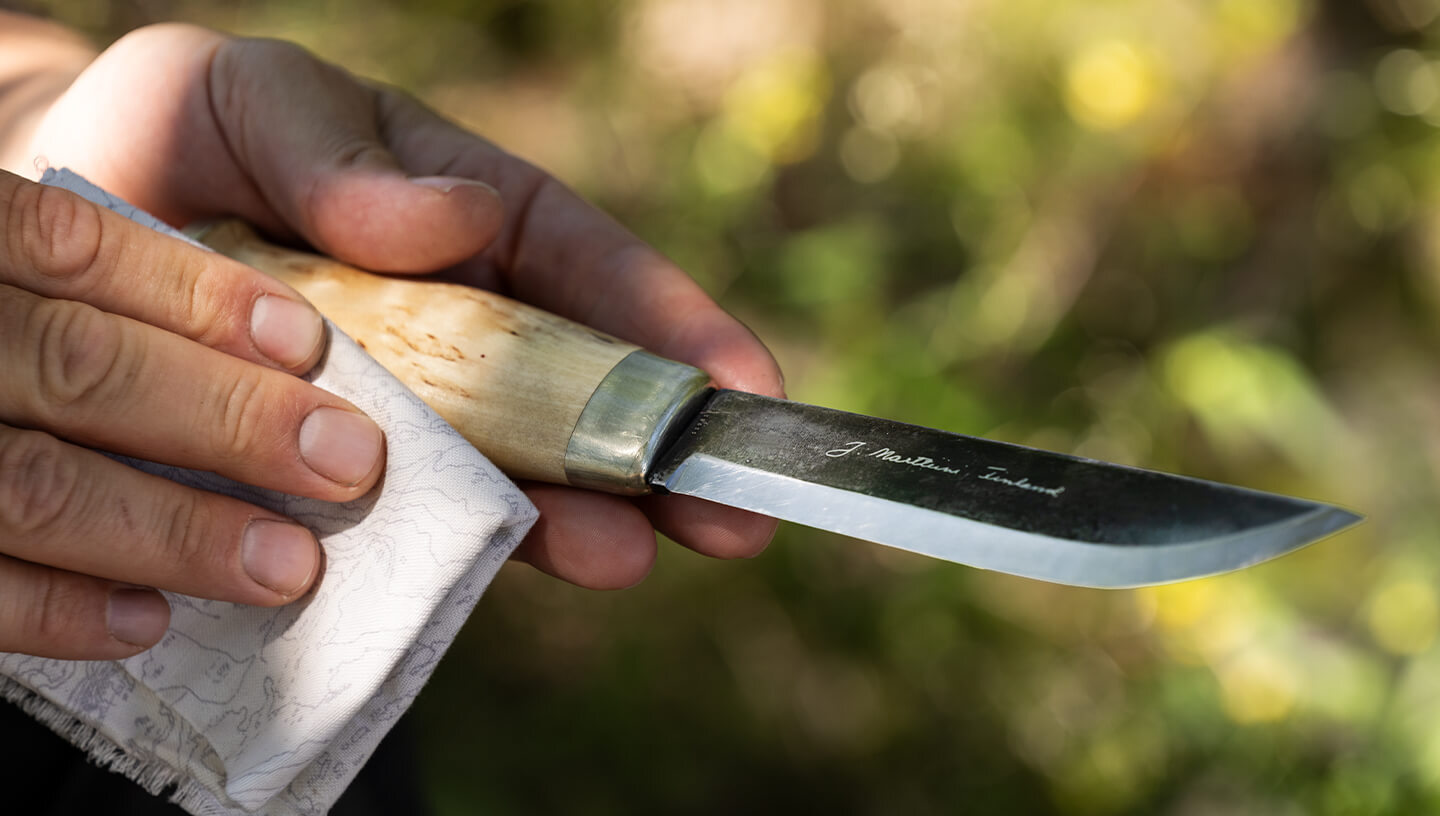
Carbon steel requires more regular care, as it reacts more actively with its environment. Oiling helps keep the blade in good condition and reduces the risk of rust. Stainless steel is more resistant, but oiling provides an additional protective layer and helps preserve the blade’s appearance. For metal parts, a thin layer of oil is always sufficient – the goal is to protect the surface from corrosion and moisture, not to leave it wet. Ballistol can also be used to clean light surface rust. Note: Brass knife components are not recommended to be treated with Ballistol oil, as it may cause dark spots on the surface. In the case of heavier rust, it is advisable to use dedicated rust-removal products and then oil the surface for protection.
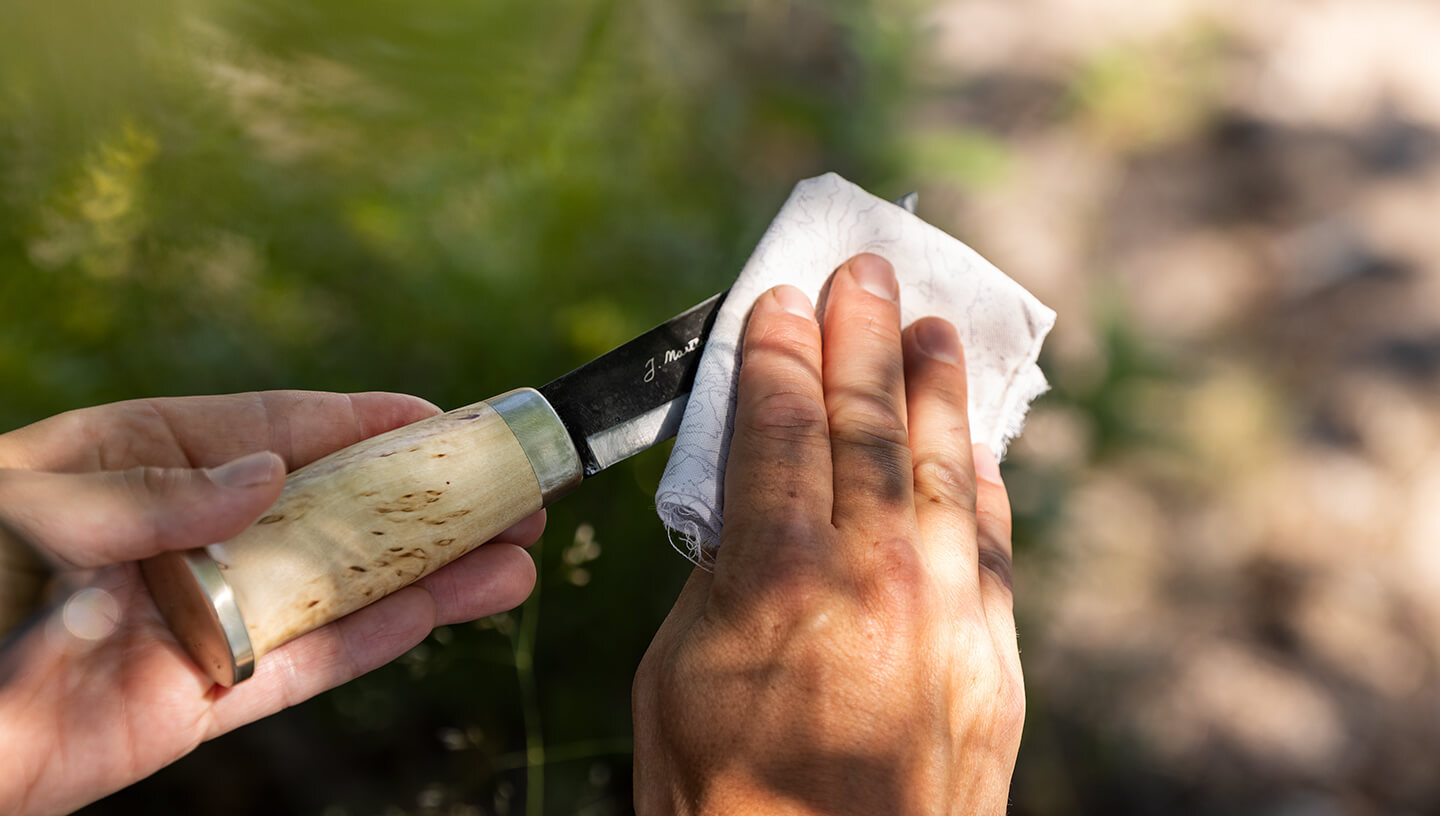
Wooden handle
Oiling protects the wood from drying out and cracking, while helping to preserve the material’s natural appearance. Wood absorbs liquids well, so oil can be applied to the handle a little more generously. Before oiling, the wood must be completely dry – this allows the oil to penetrate deeper into the material and provides better protection. Even lacquered wooden surfaces can develop microcracks over time. Light oiling helps prevent moisture from entering the material through these fine cracks.
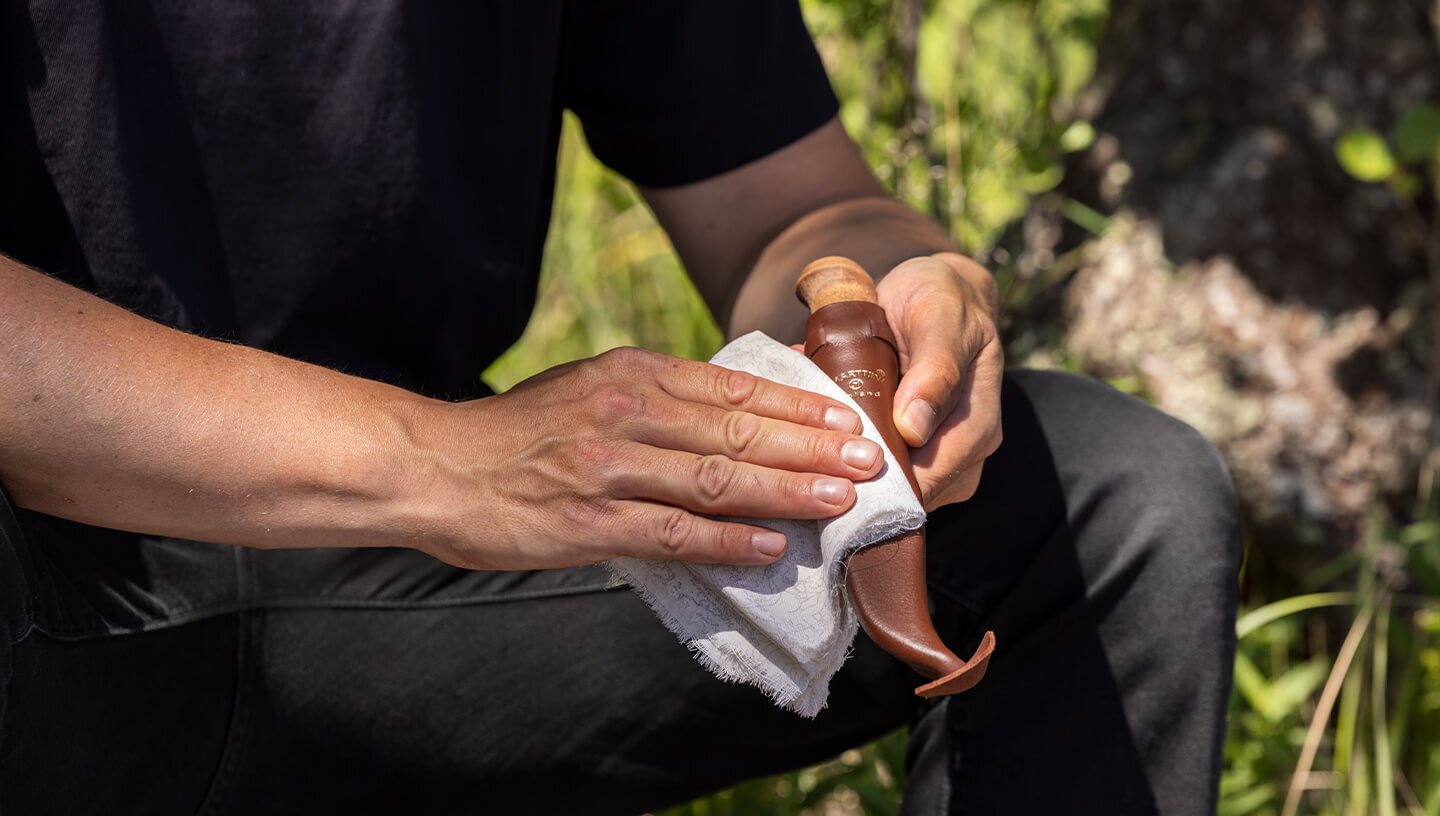
Leather products
Oiling keeps leather supple and durable. A treated surface repels dirt and moisture more effectively, helping the leather sheath retain its appearance for longer. The oil should be rubbed into the leather using a separate cloth to ensure an even result. Always start with a small amount – a few drops of oil on the cloth are sufficient. Note: Avoid dripping oil directly onto the leather – always use a cloth to achieve an even finish. Excess oil may alter the appearance of the leather.
Plastic sheath
Light oiling of a plastic sheath helps restore the surface appearance and reduces a faded look.
How often should a knife be oiled?
The frequency of oiling depends on how often the knife is used, the environment and the type of use. If the knife is used daily in a damp environment or for intensive tasks, maintenance is recommended after each use. If the knife is used infrequently and for lighter tasks, oiling about once a month is sufficient. As a general rule, maintenance should be carried out immediately after use if the knife has been exposed to moisture or acidic substances.
WARNINGS
- Do not use too much oil.
- Do not drip oil directly onto leather – always use a cloth.
- Oiling may initially darken the leather, but the effect will even out over time.
- Avoid use on brass, as it may leave darker spots on the surface.
- Oiling does not replace knife sharpening.
FAQ – frequently asked questions
How much oil should I use?
Start with 2–3 drops on a cloth. The surface should appear lightly glossy, not wet. A thin layer is perfectly sufficient.
Can using too much oil cause problems?
Yes. Excess oil left on the surface can attract dirt and affect the appearance of materials. It is recommended to always wipe off any surplus oil with a cloth.
Is the oil safe for skin contact?
Yes. Ballistol oil is skin-friendly and suitable for surfaces that may come into contact with food.
Note: The oil is not intended for food preparation or consumption.
What should I do if oil gets into the eyes or mouth?
If it gets into the eyes, rinse immediately with plenty of clean running water.
If swallowed, drink water and consult a doctor if necessary.
Is the oil vegan and environmentally friendly?
The oil contains no animal-derived ingredients and is biodegradable.
Is the oil flammable?
Yes, it is a flammable liquid. Avoid use near open flames or high heat.
Does the oil cause stains?
It may leave stains, especially on fabric and leather.
Stains can be removed with warm water and a grease-removing detergent.